Distributed timestamping for the modern Internet
Raum E009
Typ Demo
Studiengang / Lehrstuhl / Firma
Privacy & Security
Präsentator Fiona Fuchs
Projektbeteiligte Keno Goertz
Website https://tu-dresden.de
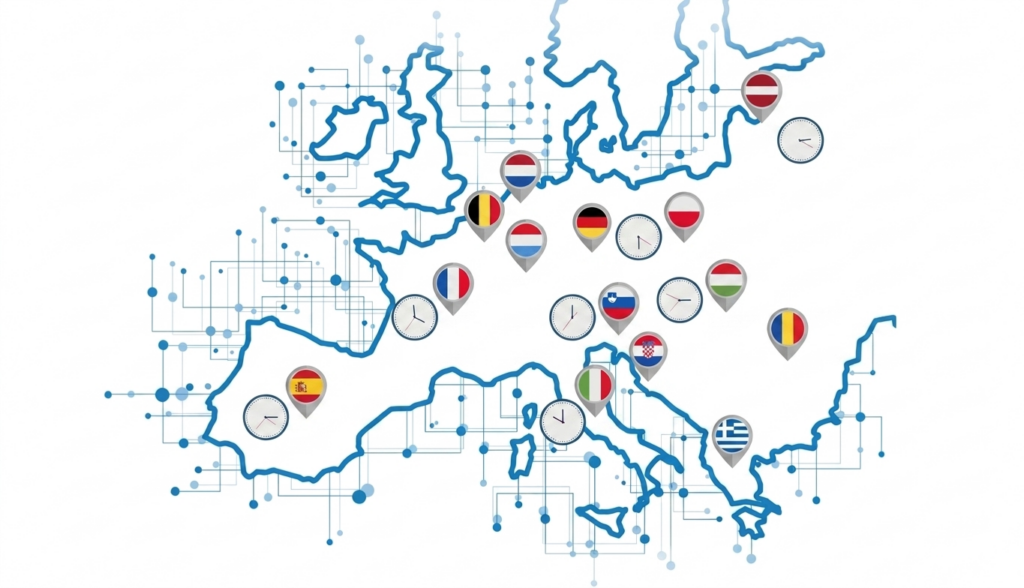
In 1610, Galileo discovered that Venus went through phases like the moon. While waiting for Venus's next crescent phase, he sent a letter with his discovery to a friend, scrambling the message into an anagram. By unscrambling the message later, he could prove that he "knew it first" without giving his secret away. The letter to his friend served as a timestamp of his discovery. Four centuries later, digital timestamps are used ubiquitously to ensure the temporal integrity of data. Established timestamping systems are centralized, using a trusted third party to issue timestamps. The European Union's IPCEI-CIS, a project which aims to build a multi-provider, continuous edge-cloud infrastructure for Europe, calls for more distributed timestamping solutions. Blockchains appear to be the perfect mechanism, as they maintain a public, permanent ledger, in which every block is timestamped. There is a catch, though: Because there is no universally synchronized clock, a block's timestamp is usually chosen by whoever creates the block. If untrusted block creators can potentially mess with timestamps, how much can we really trust them? Our research surveys the literature on the properties of blockchain timestamps: how accurate are they, what undermines their reliability in practice, and what schemes have been built on top of raw block timestamps to make them trustworthy? We also present an alternative distributed timestamping method, random-witness timestamping, and our implementation "Klerotime". Klerotime extends an existing standard for centralized timestamping, but demands signatures from multiple timestamp servers for a timestamp to be considered valid. In our demo, we show how Klerotime can be used to implement a zero-trust audit log for a multi-provider cloud infrastructure. This project is supported in part by Telekom Deutschland GmbH and the European Union's IPCEI-CIS.